Merge Blast
- 4.3
- Rating
- 5.00M
- Installs
- Free
- Price
 Analysis by App-foxy
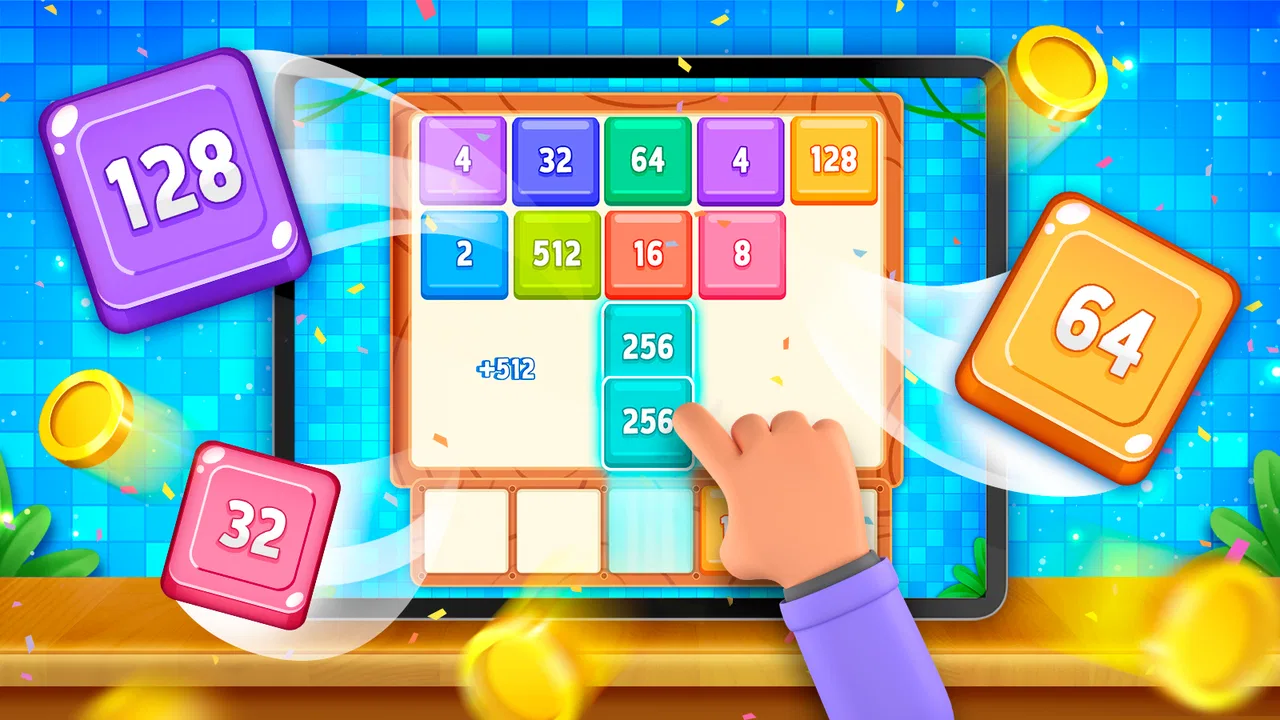
I started playing Merge Blast expecting a very simple board game, and that first impression is accurate—but incomplete. The game from Gimica GmbH is built around placing blocks, creating matches, and watching the board change after each decision. It is a casual game for quick bursts rather than a long-form adventure, yet the small board creates enough pressure to make even a short session feel purposeful.
The basic appeal is easy to understand. I choose where to place a block, look for a useful merge, and try to keep enough room open for the next move. When a placement works, the immediate visual response gives me a small reward. When I fill the wrong spaces, the board becomes harder to manage and I have to think more carefully. That cycle—action, feedback, reward, reset, and the temptation to try again—is what gives the game its staying power.
Merge Blast is free to play and suitable for Everyone, which makes it approachable for families and for people who want something uncomplicated on a phone. It supports devices running Android 7.0 or later, and its current version is 1.4.0. The game has reached over five million installs, with an average rating of 4.2 from around fifty-seven thousand ratings, so it has clearly found a broad audience without needing a complicated premise.
You May Also Like

 Google Keep - Notes and lists
Google Keep’s Quiet Growth Shows the Appeal of Simpler Notes
As mobile work gets busier, Google Keep keeps winning a simple contest: capture a thought quickly, find it later, and get on with the day.

 Blood Strike: 2.5 Anniversary
Blood Strike’s Loadouts Turn Every Drop Into a Tactical Gamble
A close look at Blood Strike’s custom loadouts: how fast access to signature weapons reshapes its battle royale rhythm, rewards preparation, and narrows the gap between fights.

 Pandora - Music & Podcasts
Pandora’s Music Is Easy to Start, but Harder to Recover
Pandora’s strength is its low-effort path from a seed to a station. Its weak spot is how much confidence it asks you to place in connection, setup, and quiet recovery.

 8 Ball Pool
 Is Built on Rivalries, Rematches, and Routine
A close look at the rivalries, rematches, shared routines, and unanswered safety questions that turn a quick pool match into a persistent mobile community.

 Samsung Music
’s Quiet Strength Is Playing What You Already Own
Its reach comes less from spectacle than from dependable access to a personal library. That simplicity is both the app’s strongest retention engine and its ceiling.

 AccuWeather: Weather Radar
AccuWeather Review: A Quick, Clear Forecast for Everyday Decisions
For everyday plans, the best forecast is the one you can understand quickly. AccuWeather makes rain timing, radar, and local conditions easy to act on, with a few trade-offs.
More From Our News Desk



How the board turns one move into another
I find the most useful way to approach Merge Blast is to treat every open patch as a future option, not merely a place to fit the next block. That small shift makes the board easier to read: before committing, I check whether a move preserves room for a follow-up or solves only the most obvious local problem. It also sets up the next question—how the game’s current version relates to what returning players can actually expect.
The first action is deliberately simple
The strongest part of the opening is that I do not need a tutorial-heavy explanation to understand what matters. I place a block onto the board, watch the result, and immediately start looking for a better arrangement. The game’s central idea is not hidden behind menus or a long introduction. Its simplicity lets me begin playing almost at once, which suits the casual category very well.
That first placement also establishes the main question for the rest of a session: should I take the obvious merge now, or prepare the board for a more valuable combination later? In a game this compact, the best move is not always the one that produces the quickest reaction. Sometimes a small improvement leaves a more useful area available. Sometimes delaying a merge makes the board feel safer, but also risks losing the space needed for the next block.
I like that the game makes this decision understandable without demanding specialist puzzle knowledge. A new player can simply experiment, while a more experienced player can start noticing patterns in the available space. The learning curve comes from seeing the consequences of placements rather than memorizing a large collection of rules.
There is also a useful difference between playing carefully and playing quickly. If I tap through moves without checking the remaining room, the board can become awkward surprisingly fast. If I pause for a moment before committing, I usually make more reliable progress. That makes the game work well as a short concentration exercise, especially when I want something more interactive than passive scrolling.
The feedback rhythm keeps the board readable
Every move needs to communicate whether it helped, and the merge-focused design depends on that rhythm. I place a block, receive a visible change, and then reassess the board. A successful merge feels satisfying because it does more than add another object: it clears or reorganizes part of the problem and gives me a reason to consider the next placement immediately.
This rhythm is why the game can hold my attention even when the rules remain straightforward. The pleasure does not come from discovering a large world or unlocking a story. It comes from the board answering each decision quickly. A good move creates space and possibility; a poor move reduces both. That cause-and-effect relationship is easy to feel while playing.
The feedback also helps make short sessions meaningful. I do not need to play for a long time to understand whether I am managing the board well. A few placements can reveal whether my current approach is working. For someone using the game during a short break, that is a real advantage: I can get into the loop quickly instead of spending the available time preparing to play.
At the same time, the simplicity can become a limitation. Players who prefer elaborate puzzles, several distinct modes, or a strong narrative may find the feedback loop too narrow. The game focuses on the placement-and-merge decision, so its appeal depends on whether that one idea remains enjoyable after repeated sessions.
Why a successful merge feels like a reward
The reward in Merge Blast is mainly built into the board itself. A good combination improves the position, opens room, and makes the next move feel more promising. I do not need a complicated progression system to understand the benefit of a successful decision. The board visibly becomes more manageable, and that immediate improvement is enough to encourage another move.
One of the more useful ways to play is to treat open space as a resource rather than as empty background. I try not to fill every convenient gap simply because a block fits there. Leaving a flexible area can be more valuable than making a quick placement, particularly when I am unsure what the next move will require. This is a small strategic habit, but it changes the game from random tapping into deliberate board management.
Another practical tip is to look at the whole board before reacting to the newest opportunity. The most attractive merge may be visible in one corner, while the real danger is a crowded line elsewhere. Taking a brief scan before placing the next block helps me avoid solving one local problem while creating a larger one. This is especially helpful when I am playing quickly and my first instinct is to choose the move that produces the fastest response.
I also find that the game rewards restraint. Not every possible merge needs to happen immediately if a different placement can preserve more options. That does not mean every move requires deep calculation; it simply means the strongest sessions come from balancing immediate feedback with the position that follows. The game stays casual, but it still gives careful players something to improve.
The reset is part of the appeal
Eventually, a session reaches a point where the board no longer offers comfortable choices. That is where the reset becomes important. Instead of treating the end of a run as a major failure, I see it as a quick invitation to try a different opening pattern. Because the core action is so easy to repeat, starting again does not feel like a chore.
The reason another session begins is not only frustration. It is curiosity. I may want to see whether saving more space changes the outcome, whether an earlier merge was a mistake, or whether a slower start gives me more useful options. The reset turns the game into a small experiment: make a choice, observe the result, and adjust the next attempt.
This structure makes the game particularly suitable for short, interrupted play. If I have only a few minutes while waiting for an appointment or taking a break, I can complete a small stretch of play without needing to remember a story or manage a large inventory. When I return later, the rules are still familiar. That low memory burden is one of the quiet strengths of the design.
The trade-off is that repeated resets may feel repetitive for players who need a clear sense of long-term progress. If your favorite casual games offer extensive collections, character development, or a campaign with changing objectives, this board loop may not provide enough variety. I would choose a more feature-rich puzzle game in that situation. Merge Blast is better for the pleasure of repeating a clean decision cycle than for building a long-term virtual identity.
Where it fits among casual alternatives
Compared with a traditional match-three game, Merge Blast feels more focused on placement and board preparation than on scanning a fixed arrangement for immediate swaps. That difference matters. Match-three alternatives often encourage rapid pattern recognition across a busy board, while this game gives me more responsibility for deciding where the next block belongs. The tension comes from the space I create or waste.
It also differs from idle games, where progress can continue with limited interaction. Here, my attention matters during the session. The board does not replace my decisions with automatic progress; I need to keep evaluating the available room and the consequences of each placement. For me, that makes it a better choice when I want a game that occupies my hands and thoughts, even briefly.
Against larger puzzle games with many stages and special mechanics, its advantage is accessibility. I can understand the central loop quickly and begin testing strategies without learning a large system. Its weakness is equally clear: the narrower structure may not satisfy someone who wants constant novelty. The right choice depends on whether you value a dependable repeatable loop or a steady stream of new rules.
The game’s Everyone rating also supports its approachable presentation. I would feel comfortable recommending it to someone looking for a mild, easy-to-understand casual game, including a player who does not usually spend much time with mobile puzzles. Still, “easy to start” should not be confused with “always effortless.” Keeping the board under control requires attention, and careless placements can make a run uncomfortable.
Free access and the practical cost question
The game can be downloaded for free, which makes trying the core experience low-risk. It also includes in-app purchases ranging from $0.99 to $7.49 per item. I would treat those purchases as optional rather than as a reason to begin playing. The important question is whether I enjoy the board loop on its own before considering any extra spending.
For a casual player, that approach is sensible: install the game, play several short sessions, and decide whether the repeated placement-and-merge cycle actually fits your habits. If you only want an occasional distraction, paying for anything may not add much value. If you return often and appreciate whatever optional assistance or content the game presents, the available purchase range gives you a choice rather than forcing a single commitment.
Parents may also appreciate checking purchase settings before handing the device to a child. The Everyone rating describes the game’s age suitability, but it does not remove the need to manage spending on a shared phone or tablet. I consider that a normal precaution for any free mobile game with optional purchases.
Who will enjoy it most
I would recommend Merge Blast to players who like compact puzzle loops, visible consequences, and sessions that can begin and end without ceremony. It is a good match for someone who wants to make a few thoughtful moves while commuting, waiting, or taking a short break. It can also work for families because the main idea is easy to explain: place blocks, create useful merges, and protect the board from becoming too crowded.
It is less suitable for players who need a story, a large cast of characters, competitive social systems, or a wide range of puzzle types. I would also point frequent match-three players toward their usual favorite if they specifically want rapid swapping and constantly changing stage objectives. The placement-centered design here offers a different kind of satisfaction, but it will not replace every casual puzzle style.
My most useful everyday approach is to play it as a short reset rather than as an endless commitment. I might open it during a five-minute pause, focus on preserving flexible space, and stop after the board closes in or after I complete a satisfying sequence. That keeps the game’s strongest quality—the clean loop—from turning into a repetitive obligation.
My verdict on the complete loop
Merge Blast succeeds because its five-part rhythm is easy to feel: I take an action, the board responds, a good decision creates a reward, a crowded position eventually resets the challenge, and the possibility of a better run brings me back. None of those steps needs a complicated explanation, yet together they create a surprisingly sticky casual experience.
Its best quality is clarity. I know what I am doing, I can see whether a move helped, and I can change my approach on the next attempt. The deeper tips—protecting open space, scanning the full board, and resisting every immediate merge—give the simple rules enough room for personal improvement. That is where the game offers more than its short store summary suggests.
Its main weakness is also clarity: the focused loop may not provide enough variety for players who want a broad progression system. I would not choose it as my primary game for long sessions or for story-driven entertainment. I would choose it when I want a free, approachable board puzzle that gets moving quickly and makes each placement matter.
Overall, Gimica GmbH has made a casual game that understands the value of a clean restart. I recommend trying it if you enjoy arranging pieces, protecting space, and chasing the feeling that the next run might be better. Just approach it for the compact merge challenge it offers, not for features belonging to a larger genre. For the right player, that focused design is not a missing ingredient—it is the reason the game works.
FAQs for Merge Blast
01What is the main objective of Merge Blast?
Merge Blast is a puzzle game where the primary goal is to merge blocks with the same numbers to create higher-numbered blocks. Players must strategically place and merge blocks to prevent the grid from filling up, as the game ends when there are no more moves available.
02Is Merge Blast free to play, and are there any in-app purchases?
Merge Blast is free to download and play. However, it offers in-app purchases for players who wish to enhance their gaming experience. These purchases might include extra lives, power-ups, or ad-free gameplay, which can provide advantages or make the game more enjoyable.
03What are the system requirements for Merge Blast on Android and iOS?
For Android, Merge Blast typically requires Android version 5.0 or higher. On iOS, the game generally requires iOS 10.0 or later. It is advisable to have a stable internet connection for optimal performance, and sufficient storage space is necessary to accommodate future updates.
04How does the gameplay mechanic of merging blocks work in Merge Blast?
In Merge Blast, players must drag and drop blocks with identical numbers onto each other to merge them into a block with a doubled number. This mechanic requires strategic planning to create space and opportunities for future merges, as well as to achieve higher scores and advance through levels.
05Are there any social features in Merge Blast, such as leaderboards or multiplayer options?
Merge Blast includes social features like leaderboards, allowing players to compare scores with friends or global players. While the game focuses on single-player puzzle-solving, these leaderboards provide a competitive edge, encouraging players to improve their strategies and climb the rankings.
Pros
- Engaging puzzle mechanics keep gameplay fresh.
- Visually appealing graphics enhance user experience.
- Frequent updates with new levels and content.
- Offline play available for uninterrupted fun.
- Intuitive controls make it easy to learn.
Cons
- In-app purchases can be expensive over time.
- Ads may interrupt gameplay frequently.
- Some levels feel repetitive after a while.
- Requires significant storage space on device.
- Occasional bugs may affect game performance.

Merge Blast
Gallery